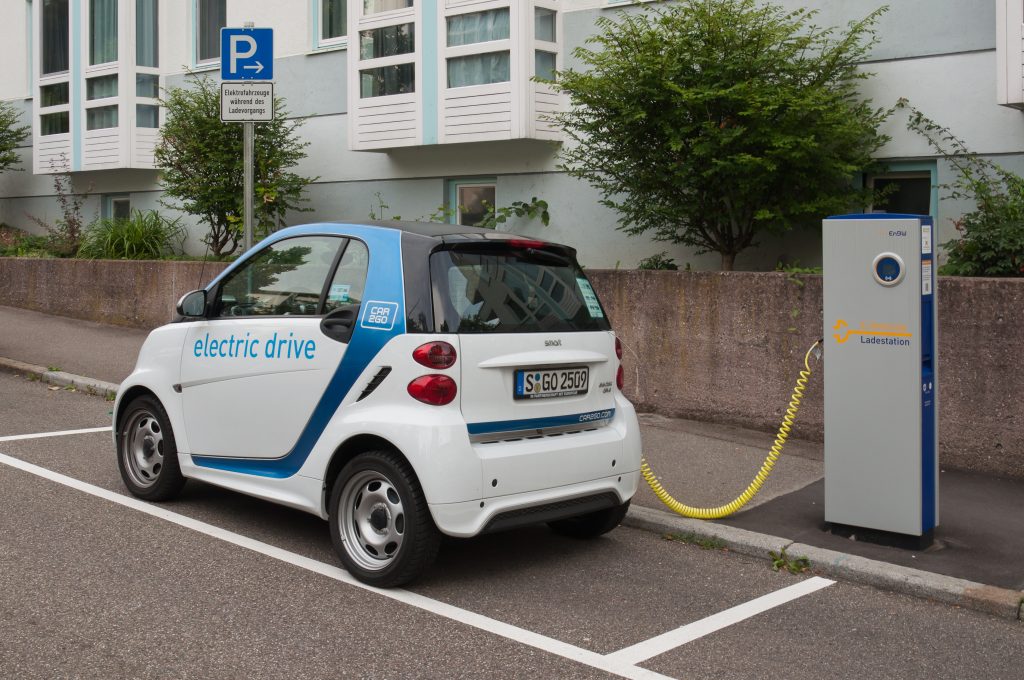
Nepal has gone electric faster than almost anyone predicted. By mid-2025 the great majority of new passenger-vehicle imports were EVs, the public charging network had passed 400 stations, and the highways were filling with quiet, cheap-to-run battery cars. That shift is real, and in many ways genuinely good. But if your roads regularly end where the tarmac does, the buying question changes shape — and the honest answer isn’t “EV” or “diesel,” it’s “which one, for the driving you actually do?”
At Nepali Garage we cover the electric wave closely and we love a robust diesel 4×4. Those aren’t contradictions. They’re answers to two different questions about Nepal’s roads.
Give the EV its due
For city driving and the main highway corridors, the case for an EV in Nepal is now strong and getting stronger. Running costs are a fraction of diesel. The charging map has filled in fast: 400-plus public stations, scores of NEA fast-chargers, and on the busy highways a charge point roughly every 25 to 100 kilometres — close enough that a Kathmandu–Pokhara or Kathmandu–Chitwan run on a modern EV is now routine planning, not an adventure. Government targets point to hundreds more stations by 2030. If your life is mostly tarmac — commuting, valley trips, the popular highway routes — an EV isn’t just viable, it’s often the smarter buy.
Where the hills change the maths
Off the main corridors, three realities still favour a robust diesel:
- Altitude and cold eat range. In high, cold districts — think Mustang, Solukhumbu, the climb to Kalinchowk — batteries discharge faster and usable range drops, often just where the next charger is furthest away. A long uphill haul with a load compounds it.
- The charger map thins out fast. The “every 25–100 km” comfort is a highway figure. Turn onto a feeder road into the deep hills and the gaps grow quickly; a detour around a landslide can put real distance between you and the nearest working charge point.
- Recovery and repair are far away. A diesel can be refuelled from a jerry can carried in the back and fixed by almost any district mechanic. A high-voltage EV fault is not a roadside job — and the specialist who can address it may be a province away.
The diesel 4×4’s enduring case
None of that makes the diesel 4×4 obsolete; it makes it specialised. Long range and refuelling anywhere there’s a fuel can. Repairability by ordinary mechanics with ordinary parts. Proven behaviour on steep, loose, broken surfaces under load. And resale strength, because the next buyer values exactly the same reliability you did. For an expedition fleet, a rural contractor, a district ambulance, or a family whose home road has no signal and no charger, the robust diesel still answers the question the EV can’t — yet.
The honest verdict
This isn’t a contest with one winner. If you’re a city or highway driver, the EV’s running-cost and convenience case is compelling, and Nepal’s charging network is racing to meet you. If your driving regularly takes you into the deep hills, far from service and signal, a robust diesel 4×4 still buys you a kind of certainty the grid hasn’t reached. Plenty of Nepali families, sensibly, end up running one of each. The right answer is the one that matches your hardest journey — not your average one.
At Nepali Garage we research both sides of this shift so you can choose with clear eyes. Compare the EVs arriving in Nepal against the proven 4×4 workhorses — specs, prices and honest notes on each — and match the car to the road you actually drive.
Sources & confidence. Nepal EV charging network (400-plus public stations; NEA fast-chargers; ~25–100 km highway spacing; 2030 expansion targets): reporting by Greensmith Nepal, ICT Frame and Charging Stations Nepal — estimated (figures vary by source and month). EV share of new passenger-vehicle imports (majority by mid-2025) via The Kathmandu Post — official (trade/customs reporting). Altitude/cold range-loss and charger-density gaps off the highways are well-documented EV characteristics applied to Nepal’s geography — unverified / editorial. Diesel 4×4 reliability and resale observations reflect long-standing Nepal market behaviour — unverified / editorial.